Docodial
| YEAR | 2017 |
| CLIENT | TreeHacks (Stanford Hackaton) |
| ROLE | UI / UX Design, Software Development |
| TOOLS | ILLUSTRATOR, FIGMA |
Project Summary
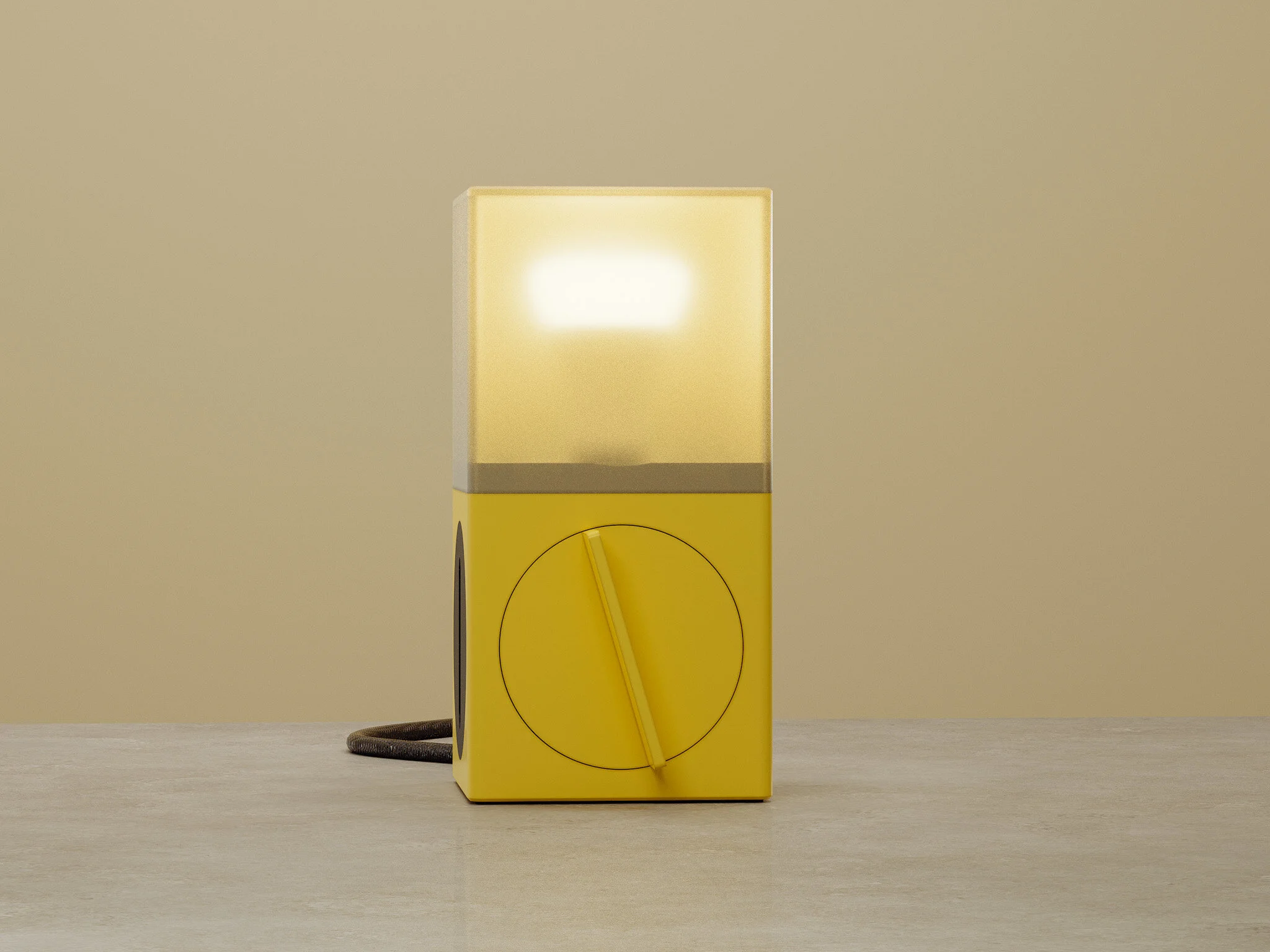
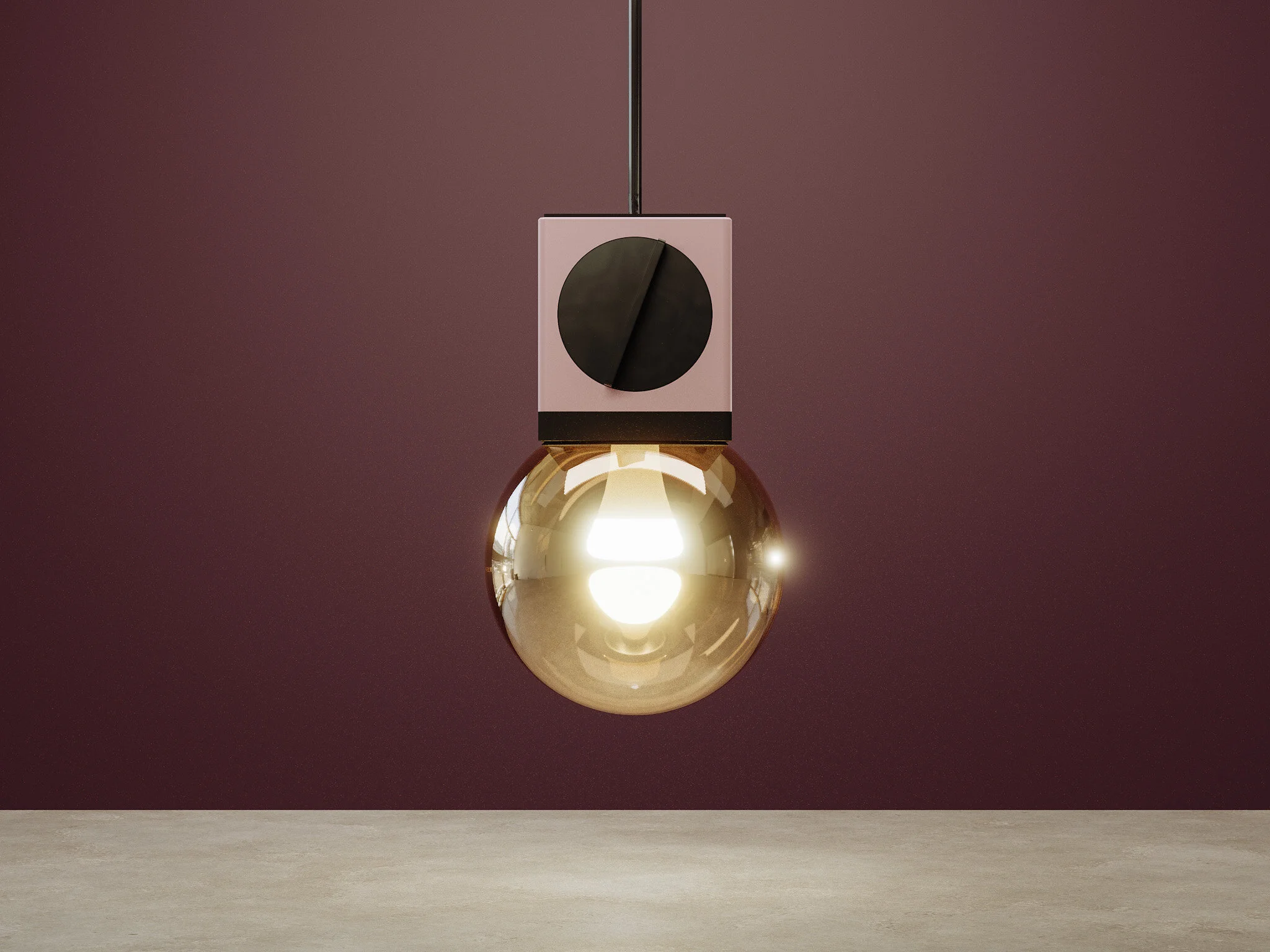
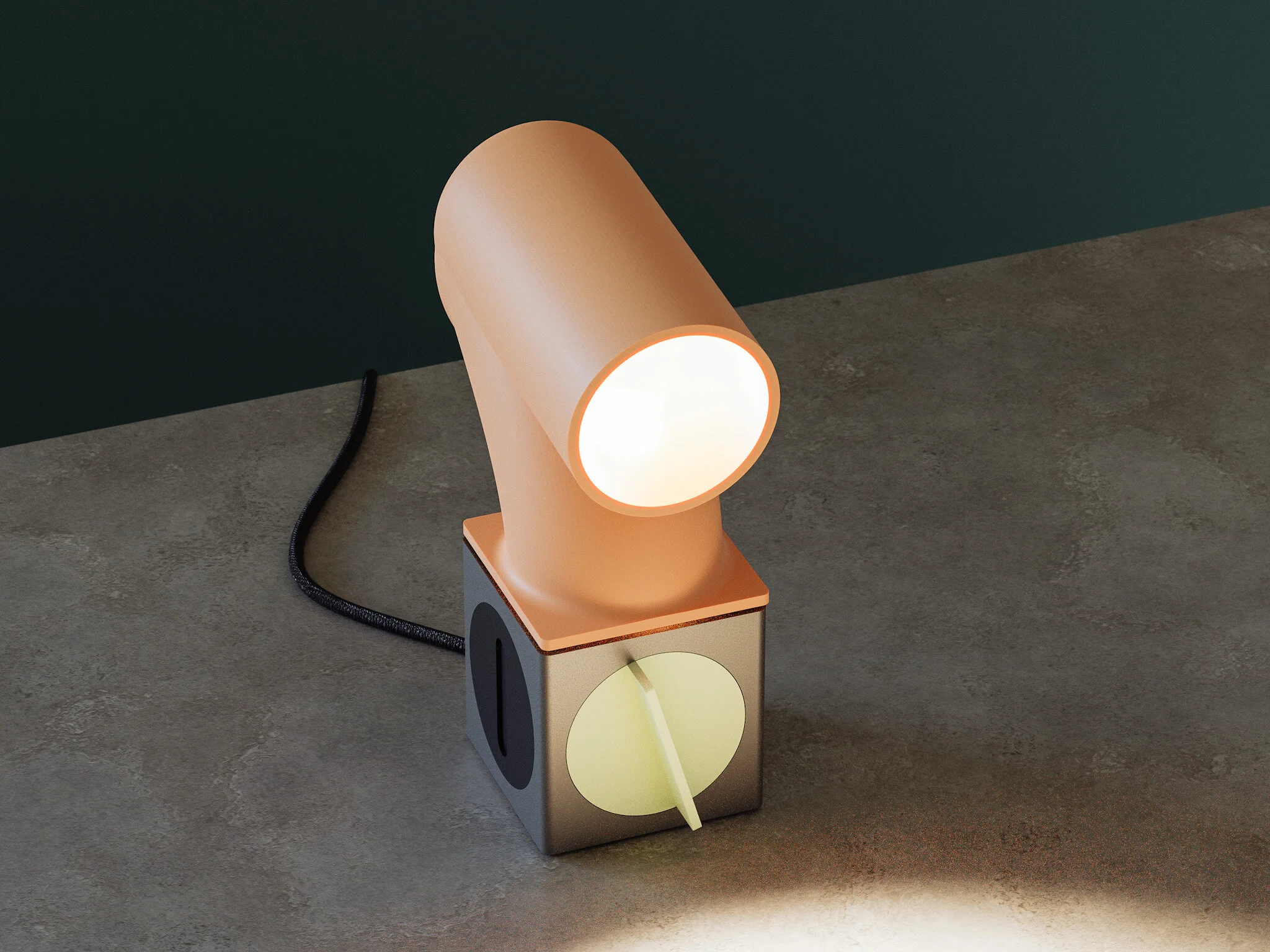
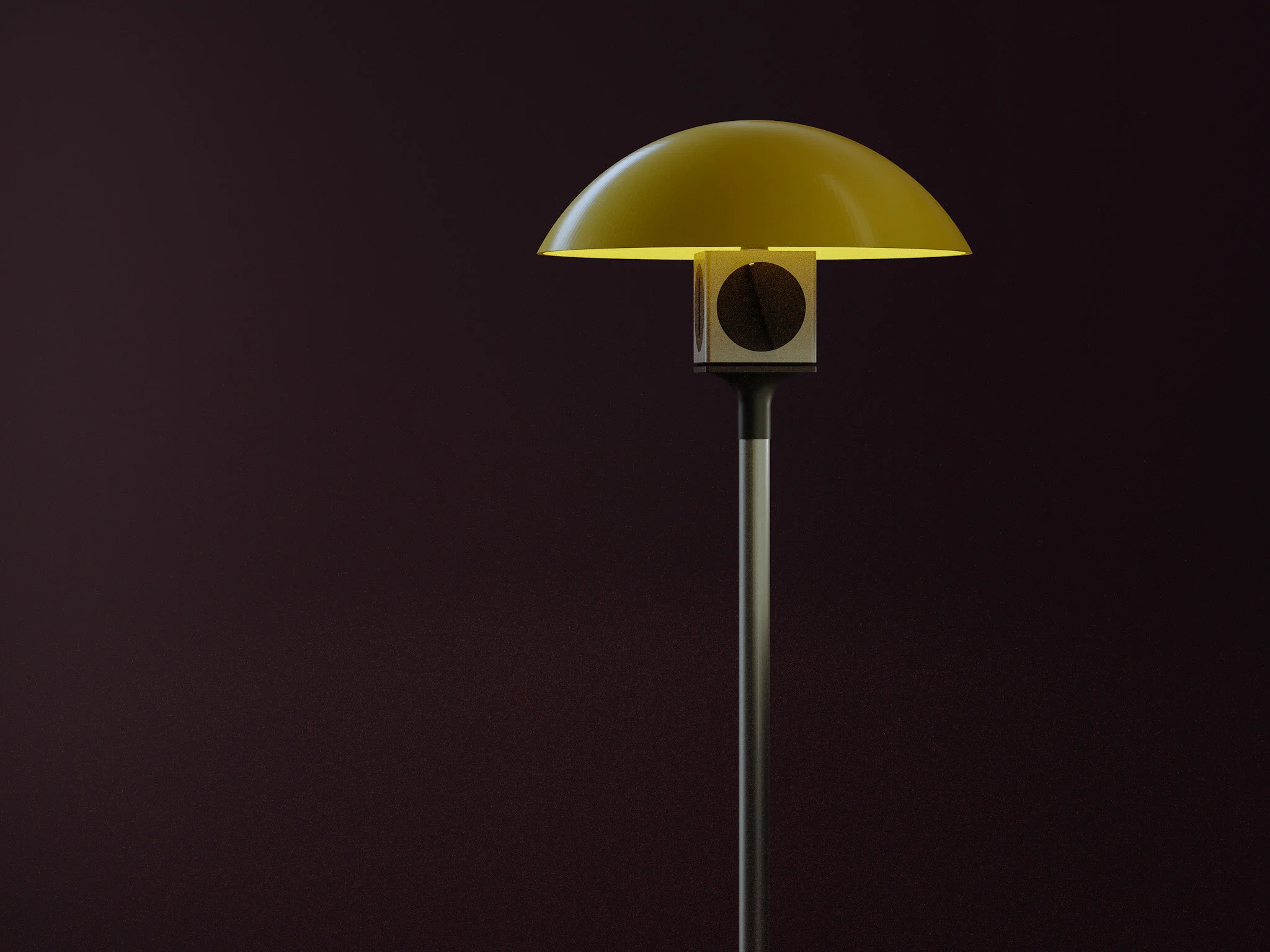
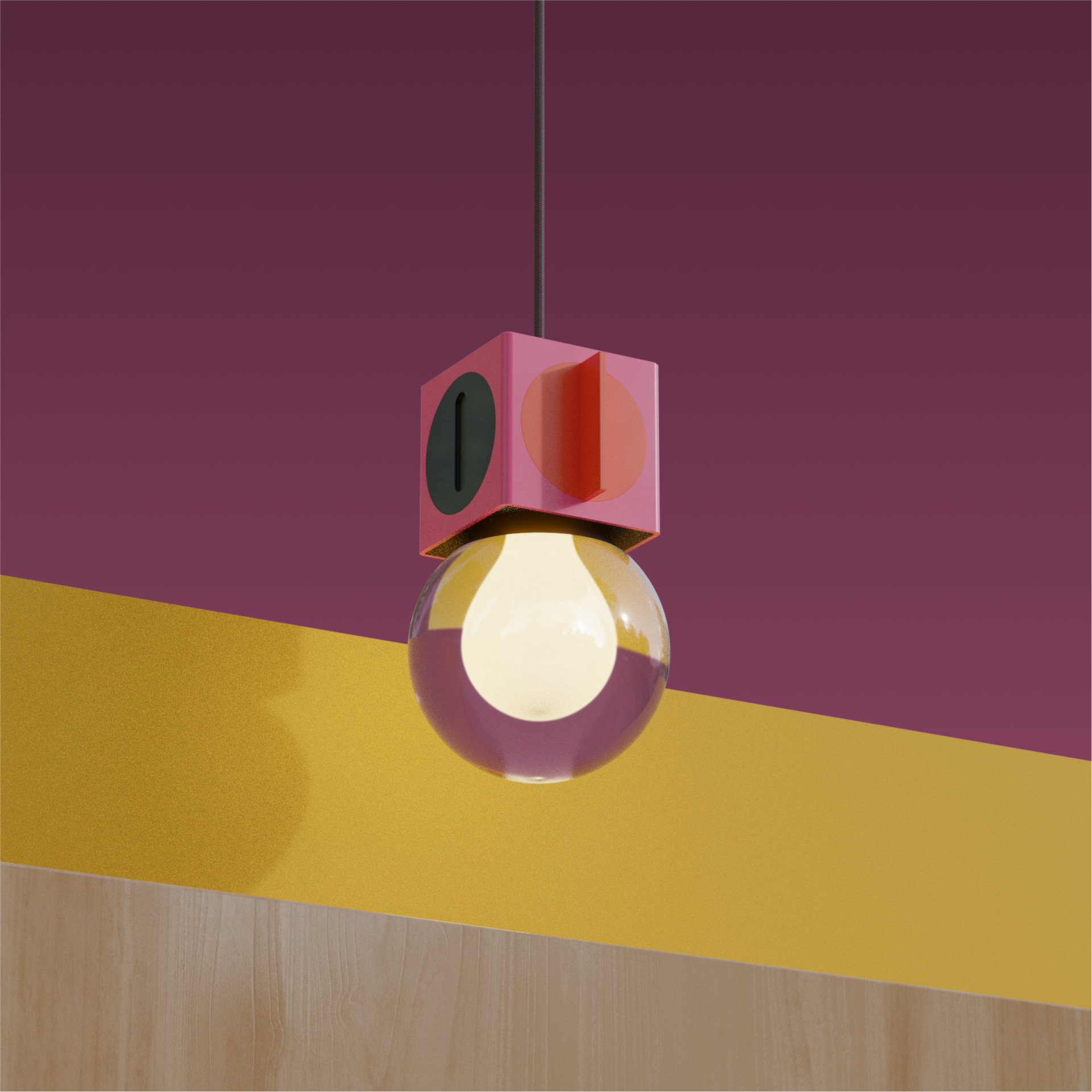
[ ]Lamp was designed as a modular and customizable light fixture that grows with you and your space as needed—with customizable shades and domes, and easy switching between table, pendant, or floor mounting positions.
Design Criteria
In starting the design process, there were a few key criteria that we wanted to stick to—first of which being adaptability. The goal was to have a lamp that could be used as a table lamp one day, a task lamp the next, and a floor lamp 6 years down the road. The second was on-lamp dimming. Given the intended adaptability and use-case flexibility of the lamp, we knew dimming would be required. While there are a few ways of implementing dimming (via WiFI, on-cable dimmers, wall dimmers, etc.), the only solution that checked the boxes of tactility and ease-of-access was to implement dimming controls onto the body of the lamp itself. Third, we wanted to have easily replaceable shades and domes—ones that could be realistically swapped in moments if you find yourself needing the lamp to serve a certain purpose.
Version 1
The original proof-of-concept was the origin of a few separate ideas—most notably being the front-and-center dimmer knob and the magnetically attached shades. This portion of the project was designed primarily by Liam Maddox, with some assistance from the rest of the Super Luminal team.
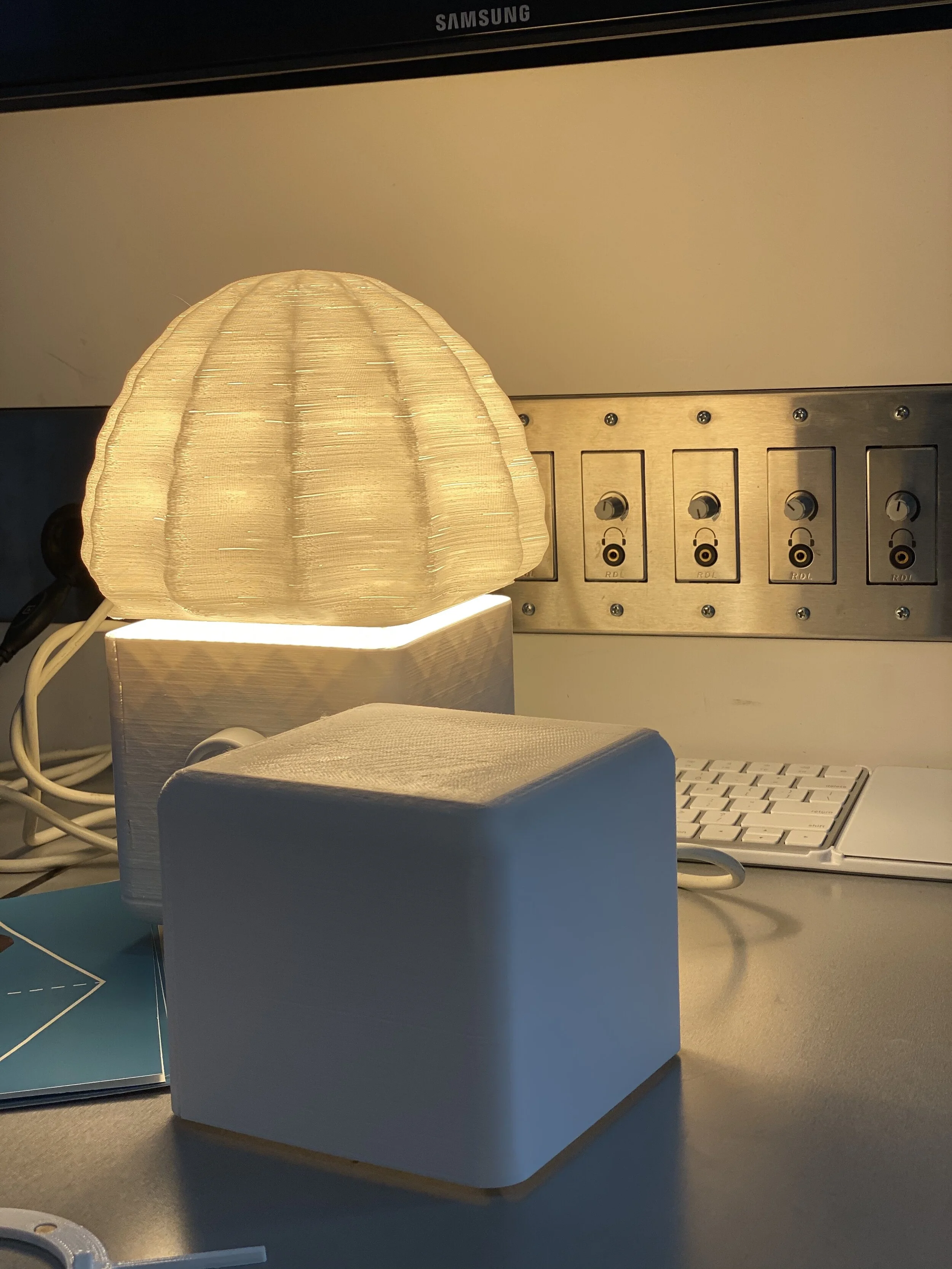
3D Printed test of the Version 1 Design
While this version successfully executed on two of the criteria, there was still the issue of adaptability. The rigid plastic feet were designed to accommodate the bottom-exit created for the cord, but they limit the usage to one orientation. In addition, the plastic construction left a lot to be desired when it came to keeping the magnetic mounting secure. Using the knowledge gained from this version, I set out to produce a refined second version.
Starting on this, I had a few main goals front-of mind. First, I wanted to dial in the dimensions. While it was important for the lamp to have a presence, it also needed to be reasonably light and compact to be used flexibly in small spaces. Second, I wanted to make the magnetic locking system stronger, more reliable, and easier to use. This included making it possible to use more irregularly shaped domes (the previous solution was to simply square the bottoms to allow magnets to be embedded in the four corners). Third, I wanted to go all-in on the adaptability features. In my eyes, this lamp needed to be equally effective as a soft and ambient table lamp, bright and wide floor lamp, and focused and crisp task light. While I knew this would be a challenge, given the form factor, the hope was to get as close as possible to each of these marks with an understanding that it may not be perfect for any given one of these situations.
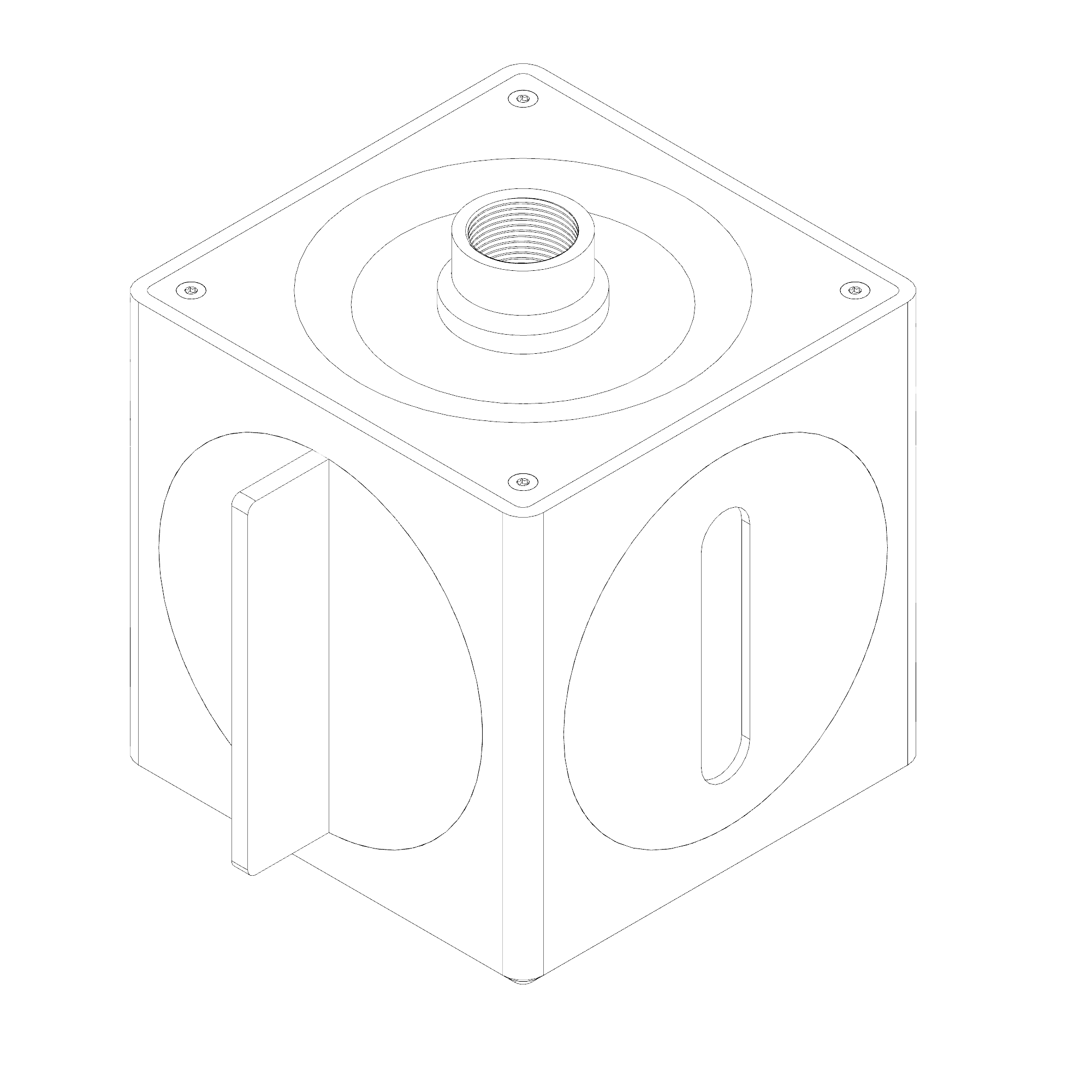
The New Version
The second version has a few distinct features that set it apart from the original design. The first, and most immediately noticeable is a much larger front dimmer knob. The second most apparent change are the more tightly rounded edges.
While these changes are largely aesthetic in nature, they also have practical and functional benefits. The larger knob adds a fun visual and tactile element to the lamp, while the front fin makes it much easier to both grip the knob and gauge the current level of dimming at a glance. The squared edges, on top of sharpening the overall look of the product, give more space on the interior for some new adaptability-focused features—allowing the new version to be used more effectively as a pendant or floor lamp.
Interior Changes: Building Towards Adaptability
While the electronics on the interior have stayed virtually identical, the way in which the cable integrates with the body of the lamp was entirely overhauled. In the previous version, the cord’s exit position on the bottom made it impossible to rest flat on a table without having built in feet. When used as a pendant, that means that there are four small protrusions on the top, which were both aesthetically unappealing and functionally unnecessary. Moving the cable exit to the rear, however, would make it impossible to use as a pendant. The solution for this issue actually involves the third major external change—and probably the most notable—the large grooved disks on the left and right sides of the lamp.
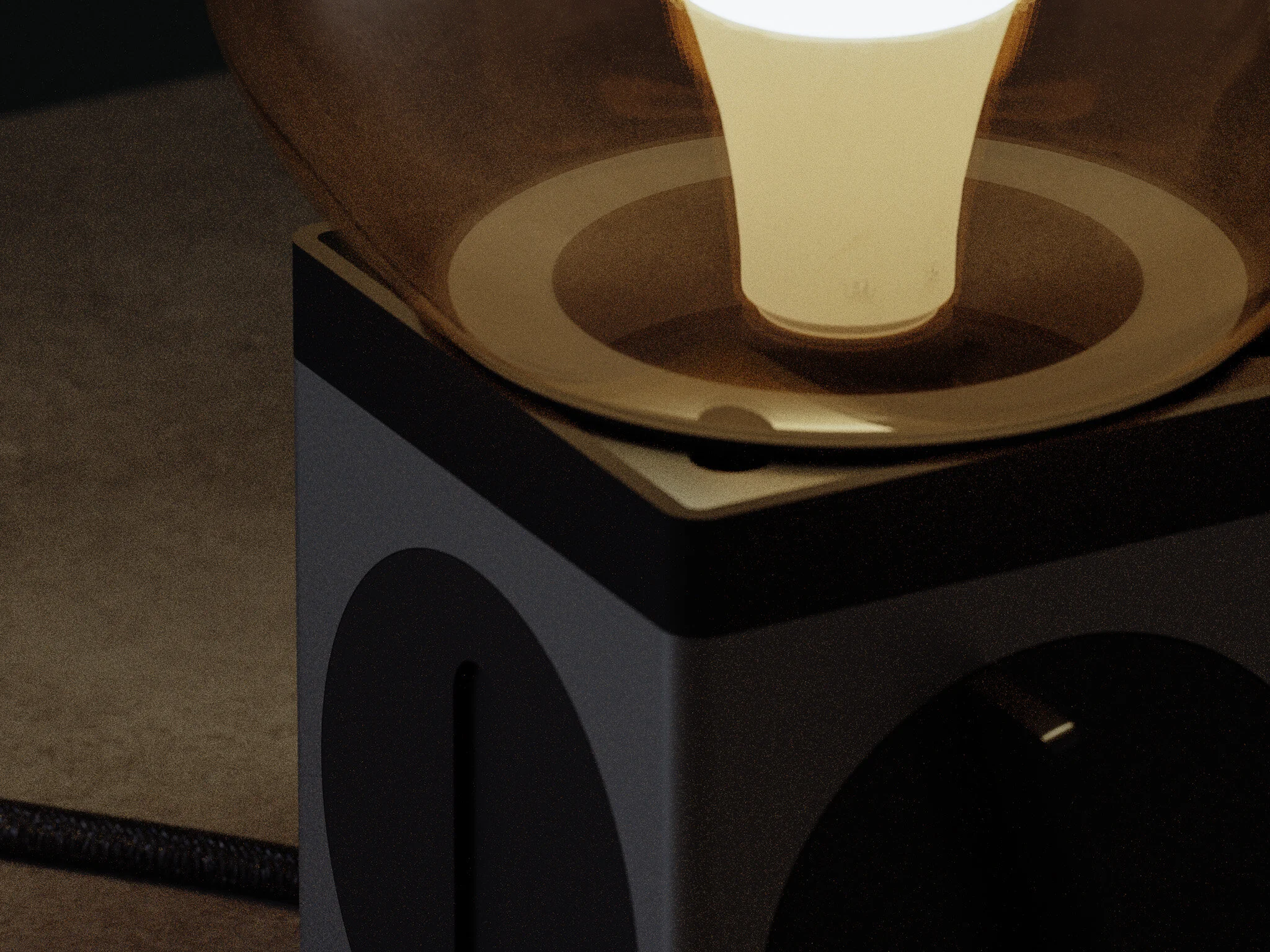
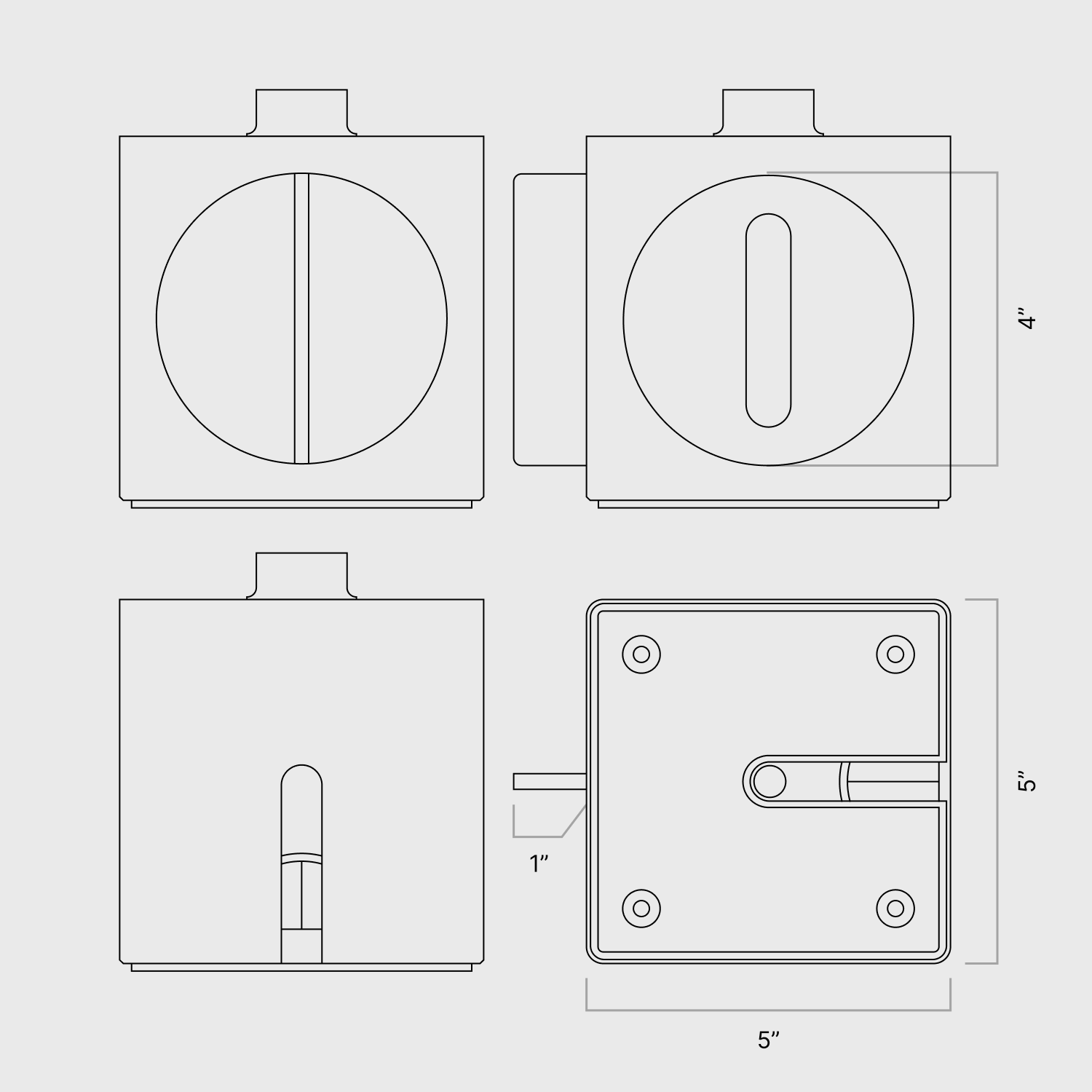
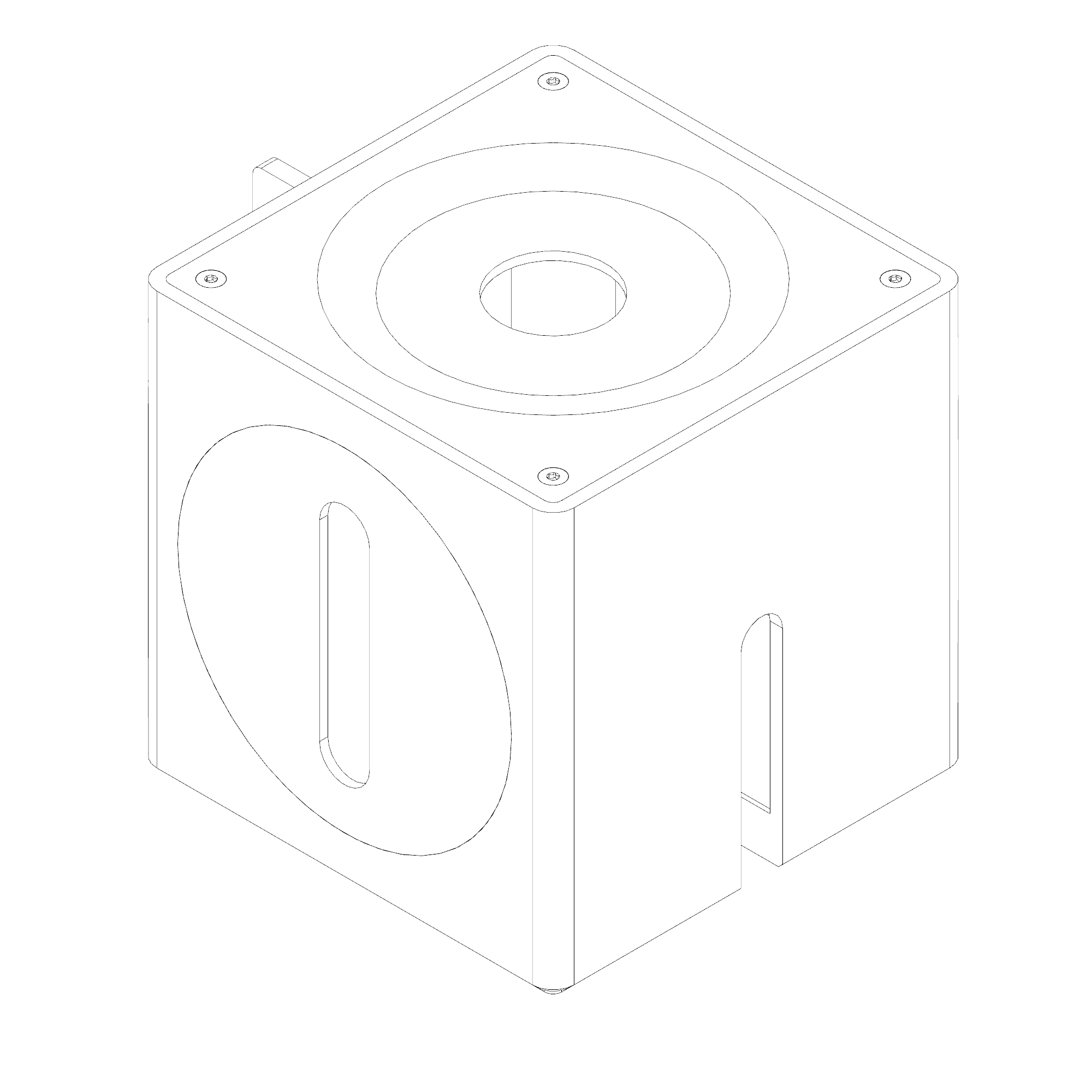
On the interior of the lamp, these disks are coupled to a channel that allows the cord to be re-oriented ay angle between the bottom and back of the device without placing unnecessary wear on the cable or causing issues with the lamp leaning off-axis when hung as a pendant. As shown in the cutaway graphic below, the cable both maintains free movement along that axis and the position of the groove on the disk can be referenced to make sure that the cord is fixed at exactly the intended angle.
Shade Mounting
To resolve the issues with securing larger shades, the upper panel is now made entirely of steel, with the magnets being relocated to the body of the shades. a shallow dish in the top guides the shades to ensure that they are centered, while still giving the flexibility to rotate the shade and body independently. Screw threads in the top allow for reinforced mounts to be attached for the permanent installation of heavy items like glass shades .
Mounting Points
The final new feature is the addition of 1/4”–20 screw threads in the bottom of the lamp. This both opens up the opportunity for mounting on a floor stand and makes it easier to wall-mount the lamp (if you want to install it as a sconce fixture. Fixed flush with these threads on the bottom of the lamp is a new rubberized base that allows it to sit steadily on a table or flat surface without slipping.
Final Product